

Empathy, Low Vision and Community-Building
I think a lot about how disability has shaped my life. I has. But, disability's voice is often silenced, it's presence made invisible, unnoticed. And when I think about the research I do on the cultural production of equity-deserving communities across Latin America, I wonder how it is that I came upon these names, these titles, these trends when these communities are also hidden by dominant discourses.
What follows is a piece I wrote for an event at the University of Missouri in Kansas City. In it I highlight the role disability has had in the shaping of my research agenda, my advocacy work and my personal values.
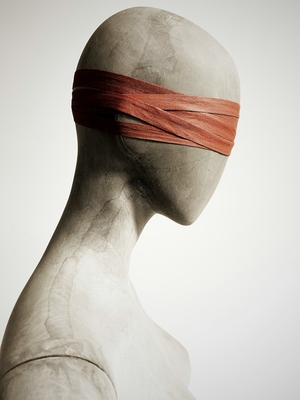
How to Recognize Resilience
Matthew Edwards
April 2026
Introduction
I know what resilience is. I know what it means and where to find it, how it looks, and I know the way it acts. I have spent a long-time reading stories of struggle, learning of the experience of others and finding in them something worth my attention. Today, I recognize in resilience models to follow, actions and behaviors to remember, to embrace, to learn from and study, to project into the future and to use to create something better, more sustainable, something that accounts for us all. Today I hold resilience close by and I understand it as a gift, as something to share and to pass on, to be a part of.
But I did not always recognize resilience.
I have low vision and I have trouble seeing things that are not close by. When I walk around campus or teach, I often don’t see the people in front of me, I don’t see my students or my colleagues as they walk by and I look for them to come to me, to reach out and say hi.
Resilience does not work this way. It is hard to find and does not come to you. It does not give away its trust easily and is often hidden in stories of failure and injustice, and represented in experiences of people of color, of immigrants, women, single parents, low income families, developing nations, rural areas, and these experiences are often overlooked, silenced, set aside for future reflection, for others to find by chance.
And I do not often find things, and much less by chance. My discoveries are intentional and require a method, a strategy and a process to make sure I don’t miss anything, to make sure I am able to see something, and keep it in focus.
This is the story, in three parts, of how I got close to and recognized resilience.
Part 1
As a young person, I spent too much of my time looking at myself, focusing on the future, on the success it promised and hypnotized by the bells and whistles produced today in the name of productivity, efficiency.
I grew up in a middle-class household in Canada. I did not see resilience.
Any trace of it that could be found close by was covered over, renamed, often by my mother who herself was a first-generation Canadian and came from an immigrant family from Eastern Europe. She called resilience “hard work”, “independence,” “responsibility,” and called it all “necessary.”
I was diagnosed with optic nerve hypoplasia in grade 5. I remember clearly the day I spent with my dad at the Sick Kids Hospital in Toronto. It was special for me, an adventure just for the two of us. I remember the tests, of us sitting together in the dark, waiting for my pupils to dilate, of me getting blasted with bright light. I remember my dad assuring me that I was doing a good job. When it was all over, my dad laughed as we walked together back to the car. I squinted. He chuckled and commented: “I guess this explains why it takes you so long to gather your toys in the back yard.”
I didn’t want people to see me struggle. I wanted to be strong, to be fast, and smart, and friendly and outgoing, and successful. So, I kept my story to myself and I worked hard to see even though I did not. I smiled and waved and imagined my friends at a nearby table as I walked in my school’s cafeteria. I was a goalie on my town’s little league hockey team, even though I didn’t see the puck. I played rugby and football, and skied and joined a cycling club, being sure to keep up to the rider in front of me. I wanted to be part of the group, part of the team, and I was, but it didn’t feel great. It was hard work faking it. I couldn’t see.
I needed to get closer.
Part 2
When I was 17 I participated in a year-long study abroad program to a city called Cordoba in Argentina. I stayed with a host family and went to a school. I remember sitting at the kitchen table with my host mother and a dictionary beside me each morning after breakfast. We would sit together and she would ask me questions, and I would share. How do you say – I have three sisters? -- Ok, what is the verb – To have – and with my magnifying glass in hand I found the verb “tener”. This was before cell phones, before internet, and it took some time, and lots of patience. But she had it, and I learnt from her.
I remember going to an all boys school called Monserrat. I was put in a grade 12 class with 40 other seniors. I remember being the new guy and being worried about doing my work. I remember getting chalk thrown at me and throwing it back, and getting caught by the teacher, and hearing the class laugh as I got pulled away to the principal’s office, I remember laughing too. I remember arriving in the mornings and greeting all 40 classmates individually with a handshake and hug, sometime a kiss on the cheek, and saying goodbye in the afternoon the same way. I remember when the whole group skipped class together and when we would all go out to the discoteca on Fridays. We would all agree to meet in the plaza and wouldn’t leave until each one of us had arrived. We were not waiting for the fastest runner, the smartest student, or the best soccer player. We were waiting for our classmate.
When it was time to return to Canada, they all came to the airport, they sang, and jumped and called my name and made noise, and gave me a hug and said goodbye. This was something different for me. It was amazing and it made me cry.
This was a defining moment in my life. It helped me to understand community and belonging in ways that didn’t depend upon my strength, speed or success. It taught me the value of shared experience and of learning and moving together. It taught me how important it was to get close – to say hello with a hug, and a kiss, to shake hands and see someone’s face. And that getting close was something everyone needed, not just me.
I needed to get closer.
Part 3
I started university and after some convincing declared my major in Hispanic Literature and Culture. I was excited and I was eager to remember Latin America in the readings I was assigned.
As time went on, I traveled to Mexico City and studied alongside 180000 other students enrolled at the UNAM, the Universidad Nacional Autonoma de Mexico. I learned more and more and began to understand how my path south overlapped with the trajectories of Spanish Conquistadores, and more recently with the economic routes of transnational commerce. I learned how these pathways south oftentimes negatively impacted local communities and that their struggles can be understood as opposition and as responses in resistance to the continued expansion of empire and colonization.
I began graduate school and took deep dives into Latin America’s colonial legacy, and into the communities that formed on its periphery. I took seminars and learned about the struggles of indigenous communities and the injustices around the extraction of natural resources in Bolivia, Chile and Argentina. I read novels, watched films and spoke to friends – to other graduate students, and their professors, to authors and artists from across Latin America -- about popular political struggles led by workers, about gender inequality and the role of women, queer folk and the trans communities in calling out of violence produced by the state, political leaders, legal systems and economic institutions. I found myself on the streets of Buenos Aires being invited to march against femicide – against the intentional killing of women by men across the region– and offered a panuelo verde – a green handkerchief -- in support of the rights of women, and a sign in support of free and legal abortion. I remember the outstretched hand, of me joining the group, of us marching together – I remember the sound of the drums, of the chants for Ni – Una – Menos –that no more women be lost.
And as time went by, I found myself deeper and deeper in experiences of otherness – I was so close I could feel it -- and when you are this deep, this close to the experiences of others, you start to see yourself.
For the blind and low vision community, seeing requires collective action. It involves the mechanical tones of assistive technology and the dry narratives of the descriptive text used as alternatives to images, it involves the slight tap–taps of outstretched canes and the soft supporting gestures of friends and passersby. To see is to touch, to listen to trust. It depends on a seamless transition from body to cell phone, from screen to reader, and revels in inaccessible street crossings, bad connectivity, glitches of all sorts. Disability forces you to connect differently as it relies on something else, in someone else.
In many ways, my deep dives, and many close encounters, in and around Latin America, helped me to recognize -- in the protests I found myself walking through, in the memories of yesteryear I listened to, in the artwork I observe today – our shared feelings of failure, of not being able to meet the mark, of missing expectations, of being left out. They have also helped me to see the value of struggle and the shared experience of doing things differently.
I did not always embrace a white cane. Nor have I always called myself blind although I always have been. I was not always been honest. But today I do, and today I am. I see in the struggles of others the value of being honest, of being proud, of speaking up, and working together.
I have gotten closer.
I have gotten close enough to recognize resilience as a model to follow. Today, I look to the struggles of the women close to me, to the disability community I now call home. I look to Latin America, to immigrant culture and to communities away from their home and I find in them stories of truth, pride and patient strength—an unwavering understanding of what is right.
I have gotten close.
For a long time, I was trying so hard to do a good job, to meet expectations, and to follow the best path, that I was unable to recognize where my experiences were leading me. I was trying too hard to see, even though it was clear that I could not. It took me a long time to understand that I was looking the wrong way. Resilience is not easy to recognize. It takes work, time, patience to get close, to bring it into focus, to learn from it and apply its lessons.
How close are you?