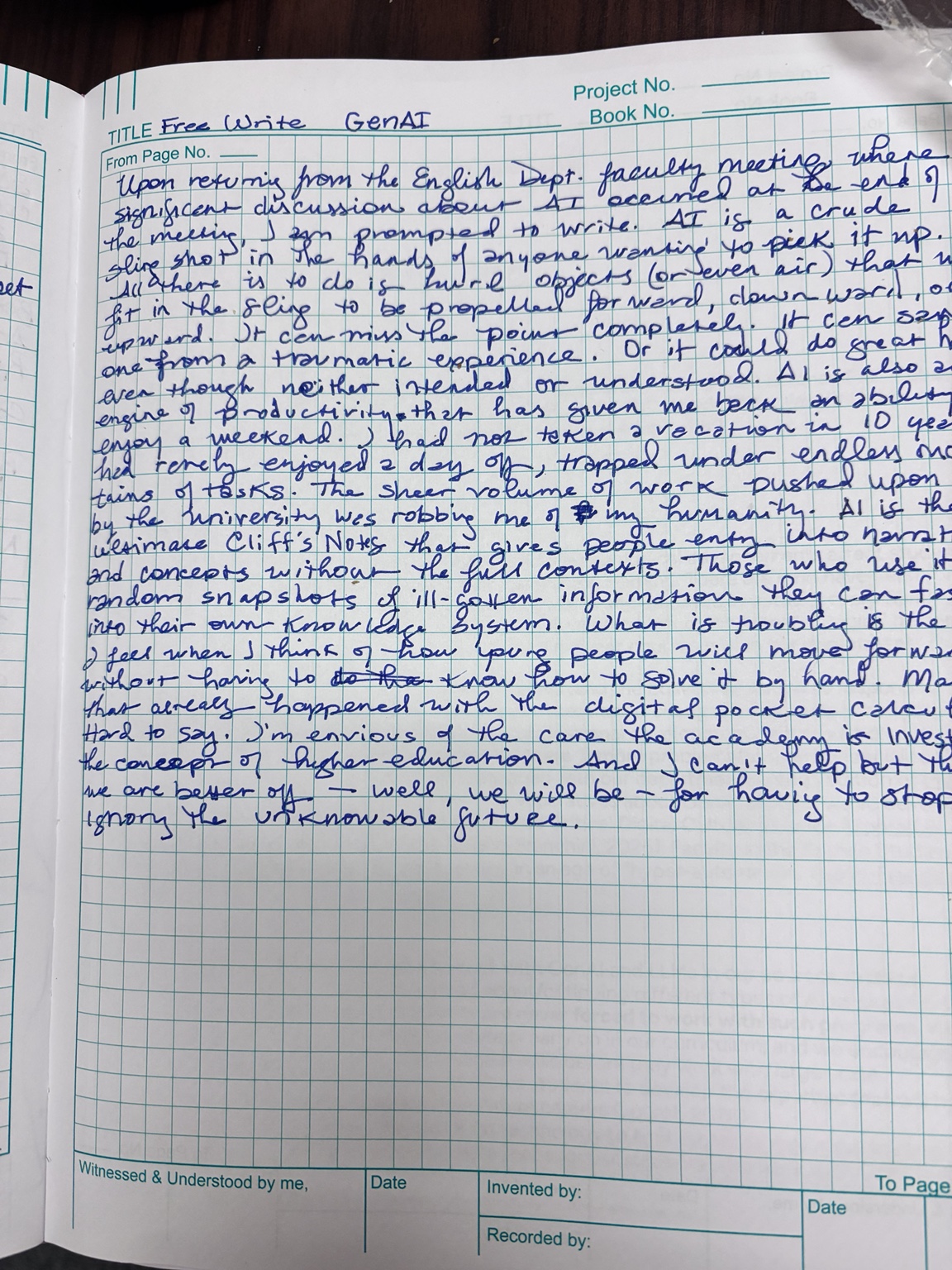
For this blog post, I decided to experiment with a basic generative artificial intelligence platform to illuminate the difference between my thinking and...
Much of higher education’s conversation about generative AI has focused on academic integrity. That makes sense. Faculty have real questions about authorship and what it means for students to...
For years, higher education has been asked to become more “workforce aligned.” The phrase appears in strategic plans, grant proposals, legislative hearings, and employer conversations with the...
Generative AI has made fluent language cheap. It can produce summaries, explanations, drafts, and stylistic imitations at a speed that unsettles long-standing assumptions about writing, originality...
AI did not just add a new tool to our teaching lives. It changed the conditions under which students read, write, plan, revise, and make meaning. When the environment changes that much, the job of...
In the 1970s, Uninterrupted Sustained Silent Reading, or USSR, arrived as an uncomplicated good. A child, a book, time. The premise felt almost pastoral: remove noise, remove pressure, remove...
Shifting research focus is rarely neat, and almost never easy. After years of building expertise in one area, it can feel unsettling to acknowledge that priorities have shifted—funders, institutions...
The "Strategies for Inclusive Learning" guide from TAPDINTO-STEM offers STEM educators practical methods to foster inclusive classrooms that accommodate diverse student abilities. The recommendations...